
Mount Pleasant Directory Years
The strongest Mount Pleasant city directory shelf is the Racine city and area run described by the UW-Parkside Archives. The set begins with early volumes and becomes far more regular after the mid-twentieth century. It is not one continuous government register. Many books were private publications, and rural Mount Pleasant households may have been filed by township, section, farm, or post office instead of the modern municipal name.
| Collection | Years represented | Where held | Access |
|---|---|---|---|
| Racine city and area directories | 1850, 1858, 1876; selected 1882-1906; alternating runs 1912-45; selected 1950-55; annual 1957-2001 and 2003-06 | UW-Parkside Archives and Racine Public Library | Archive, local-history collection, scans, or remote-copy request |
| Farmers' directories | 1897-98, 1919, and 1934 examples | UW-Parkside Archives | Township, section, post-office, and farm clues |
| Local-history files | Varied newspapers, maps, photos, yearbooks, directories, and minutes | Racine Public Library | Appointment and library access rules apply |
| Plat and surname finding aids | 1873 plat context and historical surname references | UW-Parkside and Racine Heritage Museum | Digital exhibit or repository inquiry |
Missing years must stay missing in the conclusion. An empty volume search does not prove that a person was absent from Mount Pleasant. The household could fall outside city-focused coverage, use a Racine mailing label, or appear only in a farmers' directory. Record the exact title, year, repository, page, and whether the search used OCR or the scanned image.
Mount Pleasant Directory Archives
UW-Parkside is the main regional directory archive because early material is often filed as Racine County or Racine-area history. The archive accepts remote-copy inquiries that include a name, place, and date. Its address is 900 Wood Road in Kenosha, and its published phone is 262-595-2411. A focused request should name the volume year and likely spelling instead of asking staff to research an entire family.
The Racine Public Library adds newspapers, maps, school yearbooks, city directories, vertical files, census sources, and local government minutes. Its main library is at 75 7th Street in Racine, with phone 262-636-9217. A 2025 Recollection Wisconsin account says the History Room is not open for routine walk-in use, so contact adult services for an appointment and verify current hours. Reference staff can guide a search or interlibrary-loan request, but they do not perform full genealogy projects on demand.
The library's public website gives a useful view of its current services and access routes.
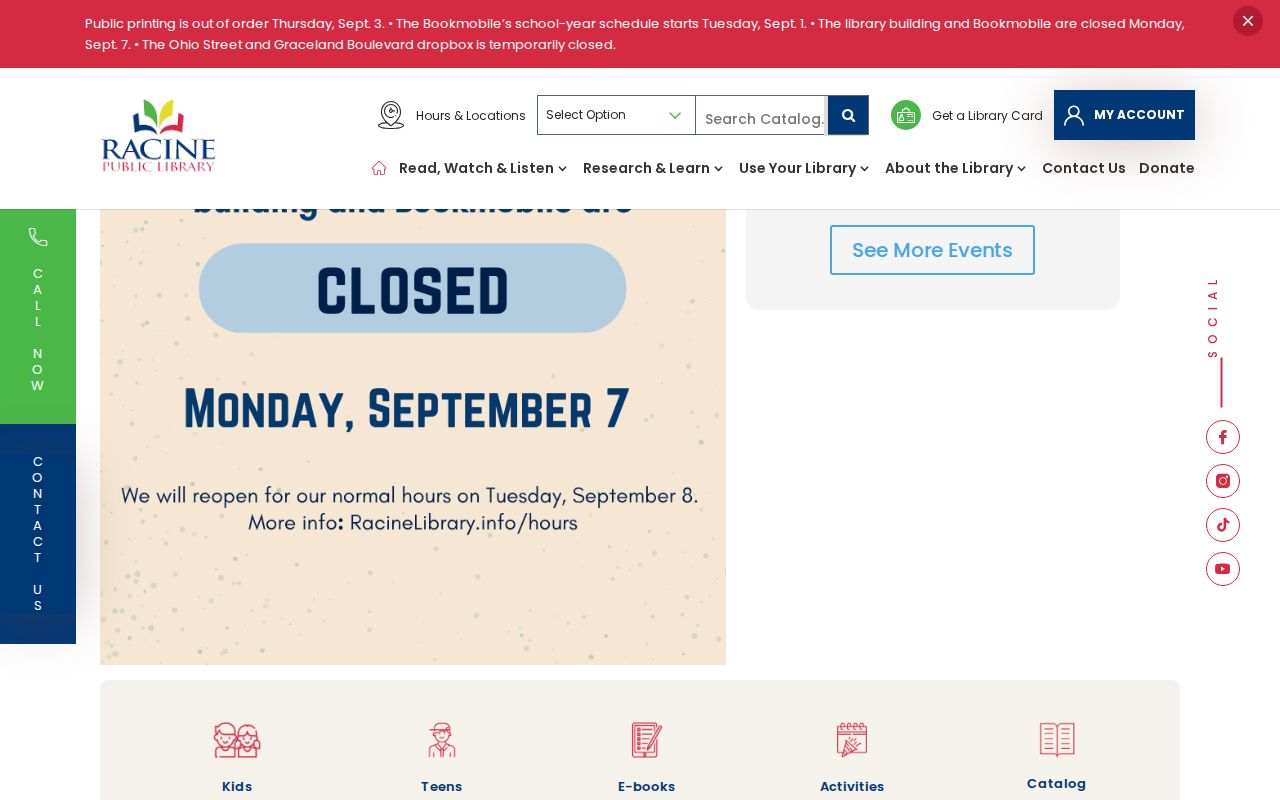
The screenshot is a starting point, while an appointment or catalog check establishes what historical material can actually be consulted.
Note: Confirm History Room access before traveling, since the appointment limit and regular library hours are separate matters.
Rural Mount Pleasant Directories
A city-focused book can miss the farm households that shaped Mount Pleasant. The UW-Parkside list includes a Smith's business and farmers' directory for 1897-98, a Prairie Farmer volume from 1919, and a Home and Farm directory from 1934. These sources may arrange entries by township and surname, with the farm owner, section, post office, and approximate acreage. They are a better first stop when the address predates a modern road number.
This difference is more than a catalog detail. City directories usually follow urban names and streets. Farmers' directories describe rural geography. Neither proves legal title or present occupancy. Pair the farm entry with the 1873 Racine and Kenosha plat exhibit, then test the tract against recorded deeds and tax rolls. If a city volume returns no result, that gap may show the source's boundary rather than the family's absence.
Collection myth. One missing city directory entry does not erase a Mount Pleasant household. Rural, township, and post-office indexing may point to a different shelf.
Decode Mount Pleasant Directory Entries
The Preservation Racine house-research worksheet supplies a safe entry inventory when no verified person-level sample is available. Read each line as a dated lead. Do not turn a name beside an address into a claim about ownership. The 1858 directory describes itself as a directory of citizens with business, state, city, and appendix material, but the research did not expose a verified Mount Pleasant individual line.
| Street address | The spelling and number printed for that edition. |
|---|---|
| Household name | The listed head of household, not necessarily every resident. |
| Profession | The trade or work description printed by the publisher. |
| Household detail | Spouse or family information where that edition includes it. |
| Business entry | A separate commercial listing that may clarify the name. |
Photograph the title page and the abbreviation key with the entry. That keeps a short mark from being read out of context and preserves the publisher and edition date.
- Criss-cross directory
- A later directory arranged by street or telephone number, useful for reading an address and nearby entries.
- Householder index
- A list centered on named household heads rather than every person at the address.
- Abbreviation key
- The volume's own list explaining shortened names, street terms, occupations, and status marks.
Mount Pleasant Directory Timeline
Mount Pleasant records changed labels as local government changed. Town organization dates to 1842, while the Village incorporated in September 2003. Directory books span both eras, so a modern place-name search alone is too narrow.
| Date | Directory and record milestone |
|---|---|
| 1842 | Town organization begins the older local-government label. |
| 1850 and 1858 | Earliest Racine city-directory items listed by UW-Parkside. |
| 1897-1934 | Listed farmers' directories add rural township and section clues. |
| 1957-2001 | The Racine-area directory run is listed annually. |
| September 2003 | Village incorporation creates the current municipal label. |
| 2003-06 | UW-Parkside lists annual late directory volumes. |
The first town hall was located near today's Highways 20 and 31 in 1890, and a later facility opened near Highways 11 and 31 in 1954. Those facts help explain why old references may use road, township, or county language instead of the present Village address.
Search Mount Pleasant Directory Scans
Some material can be reached online, including the UW-Parkside directory inventory and its linked scans. Other volumes require archive contact, library access, or a remote-copy request. Search a surname and address spelling separately. Try Mount Pleasant, Mt Pleasant, town of Mount Pleasant, Racine, a post office, and a township or section. OCR can miss faint type, so inspect the image pages near the alphabetical location when text search fails.
The UW-Parkside directory page shows the collection route and its year list.
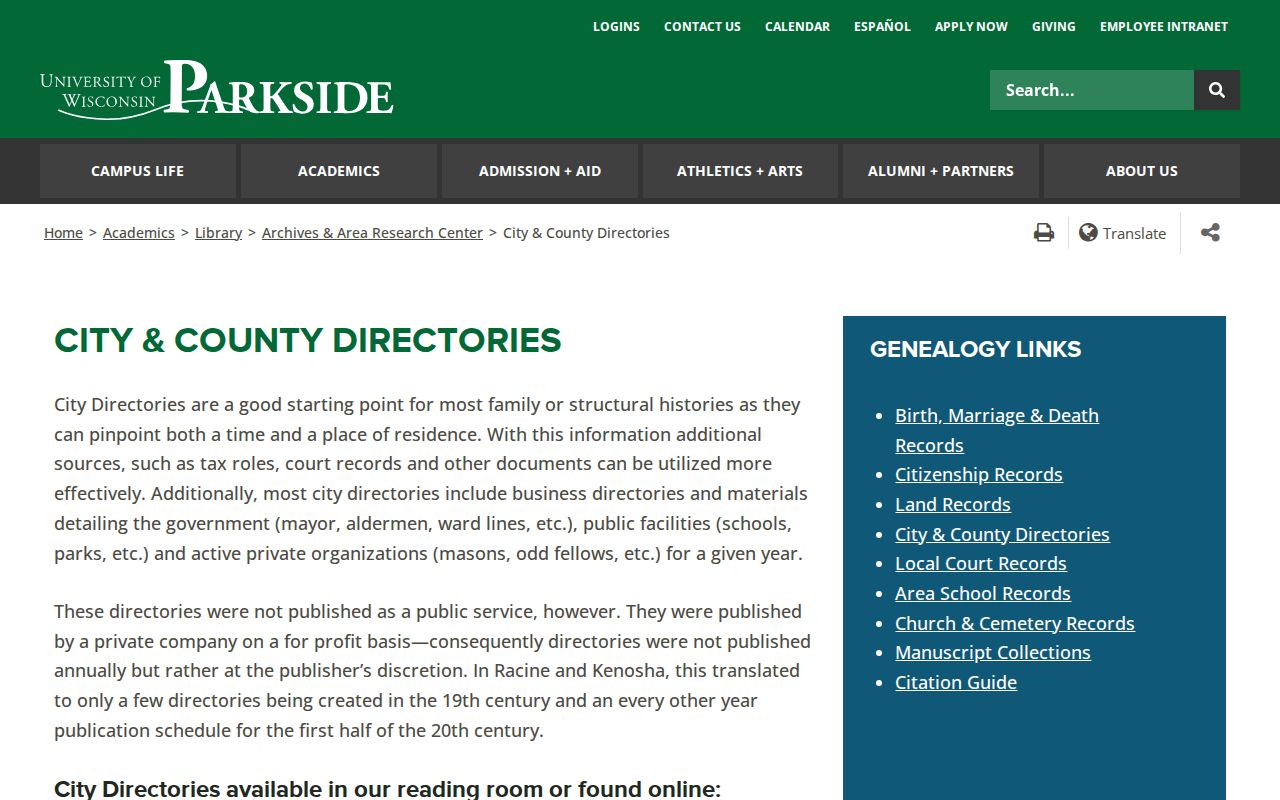
The image helps identify the right archive, but the volume itself, its page, and its repository citation are the evidence to save.
Mount Pleasant Directory Companion Records
Directories work best beside records that answer a different question. The 1873 plat exhibit can place an owner or road in township context. Tax rolls may show whether a site was built, demolished, rebuilt, or extended. Newspapers and vertical files can supply a marriage, death, road, school, civic, or business lead. Racine Heritage Museum surname cards index newspaper articles, many county cemetery stones, 1858 plat entries, and naturalization references.
Each companion has a limit. A plat is not a deed. A surname card is a finding aid, not the original article. An obituary is a lead that should be checked against a certificate, cemetery record, probate file, or same-period notice. The Racine Heritage Museum is the official starting point for current access rules; hours and research fees were not confirmed in the source review.
Note: Save the collection name, year, page or box, repository, and access date for every Mount Pleasant historical lead.
Trace Mount Pleasant Families
A careful family-history search moves across dates rather than accepting one isolated match. Pair a directory year with the closest public census schedule, then use maps, deeds, vital indexes, newspapers, and cemetery or probate records to explain changes. Federal schedules through 1950 are public under the 72-year release rule. Boundary shifts and hard-to-read pages can still produce false gaps.
- Choose the earliest likely year and list every spelling of the surname, street, township, and post office.
- Search the name index, then the street or criss-cross section where the volume provides one.
- Follow the household into the next available edition and note moves, changed work, spouse details, or disappearance.
- Compare the nearest census year and preserve the schedule citation rather than copying only a name.
- Test the address through plats, tax rolls, and deeds, then close the trail with an obituary, cemetery, vital, or probate source.
A disappearance can mean a move, death, omission, changed spelling, or a gap in coverage. State the source result in plain terms: the directory lists the household, the census reports it, or the source was not found. For present address-based work, use the Mount Pleasant By Street page rather than extending an old directory entry into a current-person claim.
Use records with care. Historical directory research serves family and local history. Do not use an old entry to track or harass a living person.